GIBO Sensor Toilet Flush Valve Product Specifications
Product specifications for the GIBO remote-controlled sensor toilet flush valve IR control module. The fourth-generation

GIBO Sensor Flush Valve
Product Specification Sheet for Remote-Controlled Infrared Control Module
l Features of the Toilet Sensor Flush Valve:
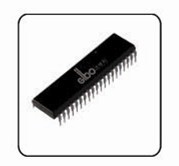
GIBO’s fourth-generation infrared control module features an imported MCU with the latest 0402 SMT surface-mount technology. Its compact size makes it suitable for most concealed and exposed sensor flush valve applications. The entire range of GIBO sensor sanitary ware incorporates Liteon sensing technology, delivering rapid response and zero false triggers. Built-in ultra-low-power energy-saving technology reduces standby current to as low as 25 µA, extending the lifespan of four standard AA batteries to over 18 months. Utilizing a robust anti-interference algorithm, the module has passed testing against 20 types of light sources and 17 common household appliances, ensuring superior performance and reliability.
GIBO squat pan sensors operate on the same infrared reflection principle as standard sensor faucets and sanitary ware. When a user enters the preset detection zone (the infrared field of the squat pan), the emitted infrared beam reflects off the body to the receiver tube. The signal is processed by the microcontroller within the control module and sent to a pulse solenoid valve, which opens the flush valve to release water according to the command. Unlike urinal flushing mechanisms, GIBO squat pan sensors enter a standby state after initial detection without flushing immediately. Flushing begins three seconds after the user exits the infrared detection range. Flush duration and closing intervals are governed by preset commands.
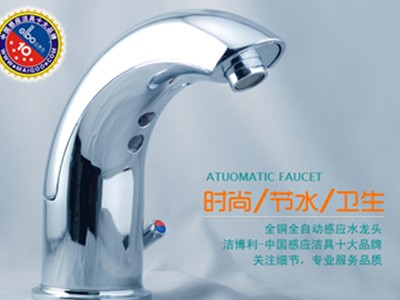
Product Appearance Illustration
l Installation Dimension Diagram
|  |

l Key Technical Parameters:
Operating Voltage: DC 4.5–6.4V
Static Power Consumption: ≤25 µA (≤0.15 mW).
Factory-Set Sensor Detection Distance & Range: Standard factory setting: 650 mm. Adjustable range: 350–800 mm (reference target: 29.7 cm × 29.7 cm standard whiteboard). Detection distance tolerance: ±10% of the rated distance.
Output: Maximum output current 1000 mA; Output voltage: 4.2 V–6 V; Output pulse width: 35 ms.
l Low-Voltage Alarm: A low-voltage alarm is triggered when the operating voltage drops to ≤4.5 ± 0.1 V.
l Flush time setting range: 3S–23S
l Distance Stability: With supply voltage dropping from 6.4 V to 4.5 V, distance variation remains within ±5%; with temperature rising from -20 °C to +60 °C, distance variation remains within ±15%.
Service life: ≥500,000 operating cycles
l Environment Adaptability: The sensor module achieves an IP65 waterproof rating, suitable for use in humid bathrooms
(1) Operating Temperature: 0°C–50°C
(2) Applicable ambient relative humidity: 10%–95%
(3) Atmospheric Pressure: 86 kPa – 106 kPa
l Anti-interference:
⑴ Multiple toilet sensor units can be powered on and operate simultaneously without false triggering.
(2) The toilet sensor is immune to interference from common electrical appliances, ensuring no false activations.
(3) Control distance variation shall be less than ±10% when illuminated at an oblique angle from a distance of 1 meter by incandescent or fluorescent lamps.
l Vibration Resistance: Amplitude 0.35 mm, frequency 10–55 Hz, three mutually perpendicular axes, 10 sweep cycles; appearance and performance meet requirements
Impact Resistance: No striking or hammering permitted
The motion sensor controller for the toilet should be installed away from direct strong light and avoid front-facing reflections from mirror surfaces
l Toilet Sensor Function Description:
Normal Flush Mode: When a person remains within the detection range of the rear sensor for more than 3 seconds, the sensor activates and the indicator light flashes once. After the person leaves the detection range, a delay of 2–3 seconds triggers a 9-second flush (factory default setting).
l Smart Flush Mode: The sensor activates after continuous detection for over 2 seconds when a person enters the detection range of the squat pan sensor, indicated by a single blink of the LED. Upon exit, a 2–3 second delay occurs before flushing. If usage time is under 1 minute, the flush duration is 4 seconds; if usage exceeds 1 minute, it flushes for the preset duration (factory default: 9 seconds).
The factory default setting is Normal Mode.
Manual Flush: Each press of the manual button initiates a flush for the pre-set duration. If the user leaves before the manual flush cycle is complete, no second flush will be triggered.
Remote-Controlled Distance Adjustment:
Operate within 0.3 m to 1 m directly in front of the toilet sensor controller for effective key response. The indicator light on the dedicated rescue remote illuminates (keep the remote facing the controller until the light turns off before making a second adjustment). Press “1” to increase the sensing distance by 5–8 cm per press, or press “2” to decrease it by 5–8 cm per press. When the maximum or minimum distance is reached, the indicator flashes at 1 Hz for 3 seconds. Adjusted distances are stored in the internal chip and retained after power loss; no re-adjustment is required upon power-on.
Remote-Controlled Flush Timing Adjustment:
Press the "3" key to extend the second flush duration of the sensor urinal. Each press increases the flush time by 1.2 seconds (adjustable range: 3–25 seconds). The controller indicator flashes once when a setting is accepted. When the maximum duration is reached, the indicator flashes at 1 Hz for three seconds.
Press “4” to shorten the flush duration of the second cycle on the sensor urinal and the sensor squat pan. Each press reduces the flush time by 1.2 seconds (adjustable range: 3–25 seconds). The controller indicator light flashes once upon each adjustment, and blinks at 1 Hz for 3 seconds when the minimum setting is reached.
l Press "5" to toggle between Normal Mode and Water-Saving Mode for sensor urinals and sensor squat pans. The indicator light on the active controller flashes at 1 Hz for 3 seconds to confirm the setting.
l Features of the Toilet Sensor:
1. Smart Water-Saving: The sensor automatically selects a water-saving mode. When a user enters the detection range of the squat pan sensor and is continuously detected for more than 2 seconds, the sensor activates and the indicator light flashes once. After the user leaves the detection range, a 2–3 second delay occurs before flushing. If the usage time is less than one minute, the flush lasts 4 seconds; if it exceeds one minute, the flush duration follows the preset setting (factory default: 9 seconds).
2. Convenient and Hygienic: Water flow is controlled entirely by the touchless sensor, ensuring thorough rinsing with no lingering odors, effectively preventing cross-contamination of bacteria
3. Automatic Range Adjustment: The toilet sensor’s control circuit features an ultra-compact design with microcontroller-based logic, automatically adjusting the detection range according to the operating environment—no manual calibration required.
4. Smart Odor Prevention: If the urinal remains unused for an extended period, the flush valve will automatically flush once every 24 hours to prevent water in the P-trap from evaporating and causing sewer gas backflow.
5. Easy Maintenance: Built-in flow control valve and filter mesh allow non-professionals to easily adjust water volume and clean the filter.
6. Installation Options: Surface-mounted and concealed installation designs, suitable for a wide range of bathroom applications.
7. Smart Power Saving: Controlled by a low-power chip with a built-in power-saving mode for ultra-low energy consumption and enhanced efficiency (DC models operate on 4 AA alkaline batteries, with a static current ≤60μA).
8. Low-Voltage Alert: When battery voltage drops below 4.6V, the red indicator flashes to prompt battery replacement.
9. Power Supply Options: AC, DC, or AC/DC Dual-Mode. The dual-mode option features automatic soft switching.

Test Environment and Equipment:
l Unless otherwise specified, all tests and trials for toilet sensors shall be conducted under normal room temperature conditions.
l Instruments required for testing and laboratory experiments on sensor-operated sanitary ware
Sensor Sanitary Ware Distance Test Rig (for distance testing)
Multimeter (for static power consumption testing)
Stabilized Power Supply (for power supply, low-voltage alarm testing, and distance stability testing)
Solenoid Valve or Other Loads (for Sensor Load Capacity Testing)
Incandescent or fluorescent lamp (for light interference resistance testing)
Reference standards for sensor sanitary ware product testing and acceptance are listed in the table below
Test Items | Test Methods and Equipment | Standard Requirements |
Appearance | Visual Inspection | No visible scratches on the mirror surface; no significant adhesive residue on other parts |
Distance | Bench-tested; standard factory detection range for the rear sensor: 650 mm ± 50 mm (reference target: 29.7 cm × 29.7 cm standard white board). | Sensor detection distance tolerance: within ±10% of the rated range (factory-set distance varies by toilet sensor mounting configuration) |
Standby Power Consumption | Connect a multimeter in series with the power supply | Static power consumption ≤ 0.15 mW (≤ 25 µA) |
Low Voltage Alarm | Use a regulated power supply to gradually adjust the voltage from 6 V down to 4.4 V | When an object is detected, the indicator light flashes at 2 Hz, but the controller provides no output. |
Distance Stability | Adjust the regulated power supply voltage gradually from 6 V to 5.5 V, 5 V, and 4.5 V; test the sensing distance on the test bench and record each result separately | When the supply voltage drops from 6.4V to 4.5V, the sensing distance variation shall not exceed ±5%. |
Light Resistance | Test on the test bench with a 100 W incandescent lamp positioned at an angle and more than 1 m away. | Detection distance variation within ±10% |
Load Capacity and Functional Testing | 4.5V input voltage; the solenoid valve used in actual applications is tested on a test bench at 8 kg (0.8 MPa) water pressure | Operates normally |
Interference Resistance | Multiple sensor toilet units powered on simultaneously, or common electrical appliances operating in close proximity | No false triggering |