Urinal Sensor Selection Guide
Urinal Sensor Selection Guide: How to choose a sensor urinal flush valve? Learn how to select the right sensor urinal. S
Urinal Sensor Selection Guide: How to Choose a Touchless Urinal Flush Valve? | A Practical Guide to Selecting the Right Sensor-Operated Urinal
Sensor urinal flush valves are available in two mounting types: concealed sensor urinal flush valves (installed within the wall) and exposed sensor urinal flush valves (installed on the wall surface). Key selection criteria include mounting type, design style, power supply method, embedded box requirements, and filter/adjustment functions. How to choose a sensor urinal flush valve?
1. Concealed or Exposed Sensor Urinal: Which Should You Choose?
For new bathroom projects, concealed sensor urinal flush valves are recommended for a cleaner aesthetic. For renovation projects where wall-breaking is undesirable, exposed sensor urinal flush valves offer easy installation by directly replacing the existing flush valve.
2. Which finish to choose?
The four commonly used concealed sensor urinal flush valve models are GBL-6210, GBL-6211, and GBL-6212和GBL-6213; the common exposed sensor urinal flush valve models are GBL-6200 and GBL-6202.
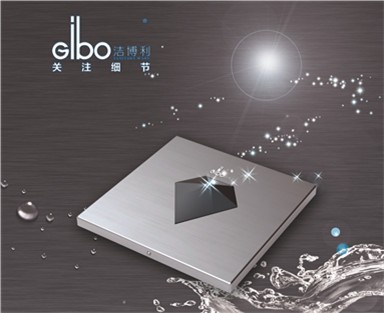
Sensor panel materials and finishes are increasingly diverse, with chrome-plated ABS panels, traditional stainless steel panels, integrated stainless steel panels, and glass panels all becoming mainstream market offerings.
3. Battery-operated or mains-operated sensor urinal?
For high-traffic public restrooms, we recommend sensor urinals with mains power to eliminate the need for battery replacement. For office settings with lower usage frequency, battery-operated models are a suitable option, requiring only annual battery changes.
4. Select the product based on wall thickness at the installation site. Standard products require a recessed mounting depth of 8–11 cm. If the wall is thinner than 8 cm, use a model with an ultra-thin recessed component to avoid compromising the wall finish.
GIBO’s ultra-slim sensor concealed valve box is designed for thinner walls (6 cm depth, suitable for 12 cm wall installations).
5. Why Choose Products with a Filter Valve and Regulating Valve?
The filter valve effectively removes all impurities, preventing solenoid valve clogging.
The regulating valve adjusts water flow volume, allowing flush size to be selected based on usage frequency. It also functions as an angle stop valve, enabling filter valve cleaning without shutting off the main water supply—greatly simplifying maintenance of sensor flush valves.
6. How to determine the material of a concealed sensor box? What are the pros and cons of different materials?
Sensor tapware concealed boxes are typically manufactured from four materials: iron, galvanized steel, ABS engineering plastic, and stainless steel. Iron concealed boxes generally feature a powder-coated finish to extend service life; however, this solution was primarily used in earlier products and is prone to corrosion within approximately two years. Galvanized steel and stainless steel both have bright surfaces but can be distinguished using a magnet, as stainless steel is non-magnetic. Galvanized steel offers slightly lower hardness than stainless steel. ABS engineering plastic tends to oxidize after about three years of use, causing internal hardening of the material.
Material | Salt & Alkali Resistant | Rust-resistant | Hardness | Magnetic Permeability | Service Life | Applicable Conditions |
Iron | No | No | Difference | Magnetic | 2 Years | Early Urinal Sensor Product Applications |
Stainless Steel | No | Rust-proof | General | Magnetic Conductivity | 5 Years | For use with lower-tier sensor urinal flush valves |
ABS Engineering Plastic | Corrosion-resistant | Corrosion-resistant | General | Non-magnetic | 5-Year Warranty | For Use in Seawater-Flushed Toilet Areas |
Brushed Stainless Steel Satin Stainless Steel | No | Corrosion-Resistant | Understood | Non-magnetic | Permanent |
When selecting a urinal sensor, consider the compatible wall-hung or floor-standing urinal style and plan water supply and drainage piping based on the urinal’s dimensions and specifications.
As the range of one-piece ceramic urinals expands, more users are choosing sensor-activated one-piece ceramic urinals (integrated urinal sensors). With their attractive design, easy installation, and convenient maintenance, integrated sensor urinals have become a recommended choice among many designers.