Common Troubleshooting Methods for Toilet Sensor Flush Valves
After over twenty years of promotion in China, TOUCHLESS sanitary ware is widely adopted in public restrooms. The benefi
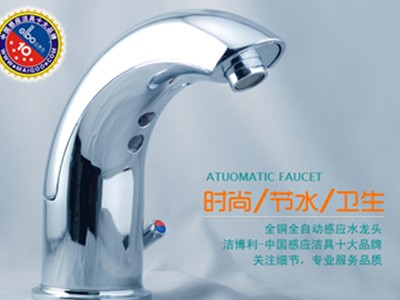
Sensor sanitary ware has been widely adopted in public spaces across China over the past two decades. Key benefits include touchless operation, intelligent water saving, and enhanced hygiene. These features address common concerns with traditional fixtures—particularly the risk of bacterial cross-contamination in high-traffic environments such as hospitals, schools, and transportation hubs—while significantly reducing cleaning staff workloads. However, inconsistent product quality among various manufacturers can lead to frequent malfunctions and delayed after-sales support. We recommend choosing reputable brands for reliability. GIBO is a leading sensor sanitary ware brand; please contact our sales consultant at 4006622163 for details.
Whether from leading international or domestic sensor faucet brands (among the top ten touchless sanitary ware manufacturers), the working principles are largely similar. The core components are an infrared sensor probe and a solenoid valve coil. The following troubleshooting and repair guidelines apply to common faults in most brands of touchless sanitary ware.

Sensor Sanitary Ware – Troubleshooting Common Faults in Toilet Sensors
Symptom | Troubleshooting | Troubleshooting |
No Flush Water | A No Water Supply | ● Ensure the water supply is on and the water pressure is at least 0.14 MPa. ● Ensure the flow control valve is fully open. |
B. Loose power or signal connector, or crushed/damaged wiring | ● Remove the sensor panel. ● Check the sensor power supply and solenoid valve wiring. Inspect for any circuit damage ● Order a new solenoid valve or sensor assembly if required. | |
C Battery Depleted | ● Replace with new batteries (Note: four 1.5V "AA" alkaline batteries required, available at convenience stores). Please follow the instructions in the "Battery Replacement" section. | |
D. Solenoid Valve Malfunction | ● Replace or order a new solenoid valve. | |
E: Scratches or dirt on the sensor window | ● Replace the sensor module. Clean the soiled sensor window with a soft cloth dampened with a neutral detergent. | |
F. Clogging of the air holes on the diaphragm of a piston valve or solenoid valve coil | ● Remove the solenoid valve cover or coil, extract the piston or diaphragm, and rinse under clean water. Reinstall in their original positions. (Note: Ensure correct positioning and orientation during installation.) | |
G Sensor Module Malfunction | ● Replace or order sensor modules. | |
Flush Water Quantity Small | A Water supply valve is not fully open | ● Ensure the water supply valves are fully open. |
B. Flow control knob not fully open | ● Check whether the flow control knob is fully open (turn the knob counterclockwise until the valve is in the fully open position). | |
C. Blocked water supply pipe or low water pressure | ● Check whether the water supply pipes and filtration system are clogged, ● Measure the inlet water pressure; a minimum dynamic pressure of 0.075 MPa is recommended. | |
D. Damaged piston rubber diaphragm | ● Open the solenoid valve piston cover and replace the piston. | |
Straight Flow Water | A. Solenoid valve piston blockage | ● Remove the solenoid valve cover, extract the piston or diaphragm, and rinse under clean water. Reassemble in their original positions. (Note: Ensure correct placement and orientation.) |
B Solenoid valve diaphragm is dirty or damaged | ● Remove the solenoid valve coil, extract the iron core and diaphragm, and rinse under clean water. Reassemble in their original positions (pay attention to correct placement and orientation). | |
C Battery Depleted | ● Replace with new batteries (Note: Four 1.5V "AA" alkaline batteries are required; available at convenience stores). Please follow the instructions in the "Battery Replacement" section. |
Intermittent Water Flow | A Poor contact of AC power supply or solenoid valve connector | ● Check the sensor's power supply and solenoid valve wiring. Inspect for circuit damage.
|
Low battery level | ● Replace with new batteries (Note: Four 1.5V "AA" alkaline batteries are required). These can be purchased at convenience stores. Please refer to the "Battery Replacement" section for instructions. | |
Sensor Indicator Flashing Signal | A When an object is within the sensing range, the indicator flashes approximately twice per second, and the valve opens, | ● Low battery level, ● Replace with new batteries (Note: Four 1.5V "AA" alkaline batteries are required). These can be purchased at convenience stores. Please refer to the "Battery Replacement" section for instructions. |
A When an object is within the sensing range, the indicator flashes approximately twice per second, but the valve does not open, | ● Batteries depleted, ● Replace with new batteries (Note: Four 1.5V "AA" alkaline batteries are required). These can be purchased at convenience stores. Please refer to the "Battery Replacement" section for instructions. | |
Water Flow Too High | Excessive water supply pressure | ● Measure the water supply pressure. The maximum recommended pressure is 0.55 MPa. ● Remove the sensor panel and adjust the flow control knob (rotate the knob clockwise until the valve achieves the appropriate flush flow rate). |